- Home
- Equestrian Professional Tips, News, and Events
Equestrian Professional Tips, News, and Events
Stay Informed. Stay Ahead.
In the fast-paced world of horse business, timing, knowledge, and support make all the difference. Our weekly horse business newsletter keeps you current on the most important developments affecting equestrian professionals — from business trends and industry news to time-sensitive opportunities and can't-miss events.
Whether you're looking to stay on top of marketing shifts, get alerts about key deadlines, or take advantage of valuable tools and trainings, this is where you'll find the insights that help you move forward with clarity and confidence.
We know your time is valuable. That's why we focus on practical, actionable information that supports your goals and helps you get the most out of your business — and your career.
Don't Miss a Beat
Sign up for our newsletter to get exclusive tips, updates, and event invites delivered straight to your inbox. It's the smartest way to stay connected and in control — no extra effort required.
 data-page_number="2561"Inside a Quarterly Review: What Happens When Horse Professionals Step Back and Track the Bigger Picture
Elisabeth McMillan
Running a horse business requires making decisions every day. Some are relatively straightforward. Others can have consequences that unfold over months or even years. But when you're busy managing horses, clients, employees, schedules and finances, it's easy to lose sight of how those decisions are affecting the bigger picture. That's why conducting a quarterly business and career review can be so valuable....More
 data-page_number="2560"What Happens When We Commoditize Riding?
Elisabeth McMillan
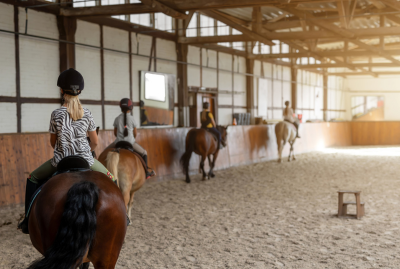
There are significant changes taking place in the equestrian industry, both at the elite and entry levels of the sport. This week, I want to focus on a trend I'm seeing in lesson programs: the growing emphasis on structuring riding instruction as a scalable, recurring revenue business. Subscription pricing, standardized curricula, group lessons and increased utilization of horses, instructors and facilities are being promoted as ways to improve profitability. The appeal is understandable but the results don't always match expectations, financially or operationally. When a business model depends on making instructors, horses and the riding experience increasingly interchangeable, it can change what customers expect, what they value and how they relate to horses and the professionals teaching them. Those changes have implications that extend well beyond the lesson program itself. What happens when we commoditize something that probably shouldn't be commoditized?...More
 data-page_number="2559"Instincts, Integration and Outcomes
Elisabeth McMillan
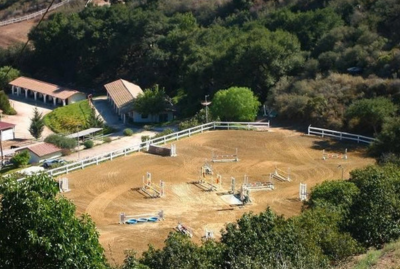
When I look back at myself as a younger horse professional, I actually had pretty good business instincts. I was in my thirties when I bought my equestrian facility in Santa Barbara, I knew owning the property could give me greater financial security. I understood the value of the property having rentals - passive income. I knew that becoming a better rider and trainer and working with better horses could lead to better clients and opportunities. I was resourceful, worked hard and made a lot of good decisions. What I didn't have were some of the tools I have now for seeing how all of those decisions interacted. I could see the individual pieces, but I couldn't always see the whole chessboard. I think that's true for a lot of horse professionals. Most are doing an enormous number of things right. They have good instincts, solve problems constantly and know their horses, clients and markets extraordinarily well. But they're also holding a tremendous amount of business and career...More
 data-page_number="2557"A New Way to Work With Equestrian Professional
Most horse professionals already have more things competing for their attention than they have time to address. What is harder to find is a place to step outside the day-to-day demands of the business, think strategically about both the business and your professional career, talk through important decisions with people who understand the industry, and get help when you need it. So we're changing the way Equestrian Professional Membership works....More
How Horse Professionals Can Communicate The Level of Their Expertise in a Market That's Forgotten How to Read It (Part 2 of 3)
Last week we looked at the gap between real expertise and authority posture in the horse world, and why the market has become worse at telling them apart. This week: what to actually do to communicate the level of your expertise in that market. 1. Stop trying to compete on the authority type's terms. Many horse professionals try to fix the problem by posting more, being more visible, being more confident on social media. That approach usually fails because it asks them to be someone they aren't, and because it's competing on the ground where authority types are already winning. The move isn't to become louder. It's to become clearer about what real expertise offers that authority posture can't.
... More
The Difference Between Expertise and "Authority" in the Horse World
The horse professionals I respect the most are also the least likely to tell you how much they know and how good they are. They were trained by multiple experts across their lifetime. They spent decades learning their trade. They entered the horse world with a longing to learn and improve, seeking out the best training they could find and they kept going. They competed and held their skills together under pressure. They developed horses whose progress was measured in years, not weeks. They coached clients to real success and are the ones who notice the slightest change in temperature when they run their hands down a horse's leg. They know things about training, horse care, barn management, and clients that they don't post about, because posting about them would flatten them.
... More
Ovecommitted, Undercommitted - What Actually Helps
Over the past two weeks we've looked at two kinds of clients who are hard to manage for different reasons. Susie and Charlotte, and Carolyn and Steve. Both patterns can end with a rider out of the sport and a horse professional carrying what shouldn't have been theirs to carry. This week: what actually helps.
... More
The Undercommitted Client — The One You Can't Convince
Last week we looked at the overcommitted client — Susie and Charlotte. The family who wants it more than they can afford, where the heartbreak grinds slowly. This week, the other kind of client. The family who has what it takes financially but won't put it toward the sport. Where the cost lands on the rider instead. Carolyn and Steve are this kind of client. Carolyn is fifteen, talented, and ready to move up. She's been riding the same horse for three years and has outgrown him. Everyone can see it. You can see it. Carolyn can see it. The judges at shows see it. The other trainers see it.
... More
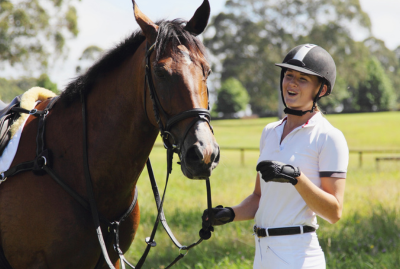
The Overcommitted Client - The One You Love
We often think the client who won't commit is the problem. But what about the client who overcommits? They can be as hard on your business and career as the undercommitted client. Here are two patterns worth looking at. The overcommitted client and the undercommitted client. They look like opposites. They end the same way. This is a three-part series. The overcommitted client this week. The undercommitted client next week. The business practices that help with both in Part 3. This week, the overcomitted client and what that looks like.
... More

The Conditions You've Stopped Seeing
Last week we talked about the "never feeling" — the sense that something in your equestrian career or business won't change, and what it's actually telling you about the conditions underneath it. Here's the part many of us miss. Like a backpack we put on months or years ago and never took off. We don't see it because it's behind us. We don't remember when we started carrying it. We've stopped noticing how heavy it is. And we have no idea what's actually in it anymore — what we added in year one, what we picked up in year three, what someone else handed us in year five that we just took and kept walking. The weight is real. We feel it in our shoulders, our pace, our energy at the end of the day. But the contents have become invisible.
... More
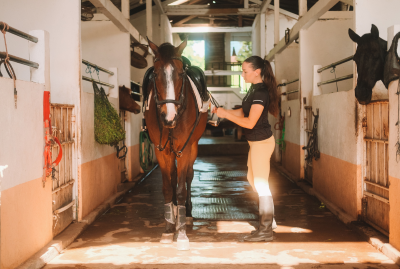
The Never Feeling and What it Means
Most advice about motivation (or the loss thereof) tells you to reframe your thoughts, focus on the positive, or remember your why. If you've ever driven home from the barn or a horse show too exhausted to feel anything, you know that advice is mostly useless when you actually need it. So here's something more honest.
... More
Four Questions That Point Your Marketing in the Right Direction
Last week we talked about the four jobs your marketing should be doing: Growth, Retention, Positioning, and Brand. Some of you wrote back, and the most common response was some version of "Okay, but how do I know which one is the weak link in my business right now?" That's the right question. Because here's what's true for almost every horse business I work with: marketing isn't usually failing across the board. One or two of those four jobs are pulling their weight, and one or two are quietly underperforming — and that's where the leaks are. The trouble is, when you're busy running a barn or a training program, it's hard to tell which is which. Everything just feels like "marketing," and when results are uneven, the temptation is to do more of everything. That's exhausting and it rarely fixes the actual problem. So this week, I want to give you a quick diagnostic. Four questions. One for each job. Answer them honestly and you'll see the pattern.
... More
The Four Jobs Your Marketing Shoud Be Doing for You
Last week, we talked about five ways to capture or create worthwhile social media content — the kind of posts that actually do something for your business instead of just filling up a feed. If you've been working on that, good. Keep going. But this week, I want to zoom out. Because here's what I've noticed after years of coaching horse professionals: most of us treat marketing as a task. Something to keep up with. Another thing on the list — post a photo, send the newsletter, update the website, repeat. And when marketing is just a task, it starts to feel like a chore that never ends and never quite pays off. The barns and horse professionals whose businesses grow steadily — and just as importantly, retain their best clients — don't think about marketing that way. They
... More

5 Ways to Capture or Create Worthwhile Social Media Content
With spring steadily in progress, many horse professionals are gearing up their social media marketing efforts. Here are a few general tips to help you create content without wasting time—or putting yourself or your clients in a bad position. Most horse professionals don't need more content to capture - there is already a lot going on around them. They need content that reflects their program, respects their clients, and doesn't create unnecessary problems. And, they worry about how their content will come across on the massive social media stage. Often they think they can't possibly "compete" because they are measuring themselves by the wrong standards. Here are some things to help you keep things in perspective. A lot of what you see online is influencer content. That's not your job.
... More
What Healthy Growth Actually Looks Like In a Horse Business
I was recently a guest on a Nashville podcast—Behind the Curtain: Nashville’s Movers, Shakers & Tastemakers—and because the conversation was happening in Music City, we ended up comparing the horse industry to something everyone there understands well: the music industry. The comparison was striking. The U.S. music industry is widely recognized as a major economic force, generating roughly $212 billion annually. But the horse industry is not far behind—at approximately $177 billion, supporting around 2.2 million jobs. What’s even more interesting is the difference in growth. While the music industry has grown by approximately 18% in recent years, the horse industry has expanded by roughly 45% over a similar period. From the outside, that kind of growth suggests opportunity. And in many ways, it is. But inside the industry, the experience often sounds very different.
... More
5 Top Benefits of Conducting a Quarterly Review and Planning Session
Our Quarterly Horse Business Review and Planning Session looks at key business indicators from a variety of perspectives. It looks at your financials, operations, career goals, marketing success, and client relationships. There are many benefits to conducting Quarterly Reviews internally (your financials, operations, employee feedback, marketing review etc.) and outwardly with your clients. Here are three top benefits.
... More
If Nothing Changes, Nothing Changes: Why Time Structure Matters in Your Horse Business
Last week, we talked about the difference between hustle and agility—how working harder isn't what moves a horse business forward. In fact, many horse professionals get so bogged down in the day-to-day that they simply push harder, without realizing they may be working against their own best interests. Without clear forecasting, effort gets misapplied—time, energy, and resources go toward maintaining the present rather than building what comes next. On the other hand, when outcomes are clearly mapped out in advance, effort can be aligned in a way that actually produces results that support the business long-term. Most professionals feel that difference immediately. They recognize the moments when they've stepped back, seen the bigger picture, and made decisions that moved them forward—not just kept them busy. But what often follows is just as important—and far less discussed. It works—until it's treated as a one-time fix instead of an ongoing practice. In a horse business, t
... More

Agility vs. Hustle: Why Clarity Comes First
When things shift, most people default to hustle. The horse professionals who do well start with clarity—then move with agility. In the horse industry right now, the pressure isn't imagined. It's coming from multiple directions at once—economic uncertainty, rising costs, staffing challenges, and even larger global events that ripple down into everyday decisions. When that happens, most people respond the same way. They push harder. They do more. They try to figure it out on their own. It feels productive. It usually isn't.
... More
When Stability is Uncertain
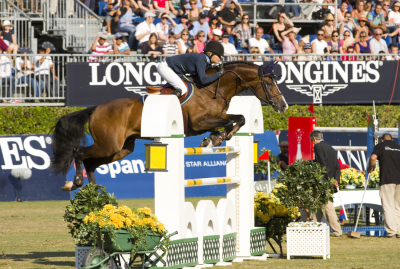
Horses were evacuated from the Global Champions Tour in Doha. Nearly 150 international show jumping horses—already on site—had to be quickly organized, rerouted, and flown out under emergency conditions after Iranian missile strikes and escalating conflict led to airspace closures across the region. That's not minor. That's the top of the sport just stopping, and then figuring it out. At the same time, across the industry, people are watching fuel and diesel prices climb. Some are losing grooms. Others are quietly trying to rework schedules, costs, and plans without making a big deal about it. But it is a big deal.
... More
Why Tax Law Awareness Is a Practical Advantage for Horse Businesses and Horse Professionals
In most horse businesses, friction around policies and pricing is not caused by the policies or the pricing. It is caused by missing foundations. When the structural pieces of a business are weak — an unclear value proposition, vague brand position, underdeveloped aspiration — even reasonable policies feel harder to hold and harder to explain. That friction is not neutral. It costs time, energy, authority, and often margin. When the foundations are strong, policies and pricing feel natural. Expected. Aligned. Not because clients are passive — but because the business itself is clear. Let's look at the three foundational pieces that quietly reduce friction across your entire operation.
... More