Tips and Upcoming Events continued
Displaying Matches 17 thru 32 of 41 Found. FIRSTBACK NEXTLAST

Last week we talked about the "never feeling" — the sense that something in your equestrian career or business won't change, and what it's actually telling you about the conditions underneath it. Here's the part many of us miss. Like a backpack we put on months or years ago and never took off. We don't see it because it's behind us. We don't remember when we started carrying it. We've stopped noticing how heavy it is. And we have no idea what's actually in it anymore — what we added in year one, what we picked up in year three, what someone else handed us in year five that we just took and kept walking. The weight is real. We feel it in our shoulders, our pace, our energy at the end of the day. But the contents have become invisible....
Most advice about motivation (or the loss thereof) tells you to reframe your thoughts, focus on the positive, or remember your why. If you've ever driven home from the barn or a horse show too exhausted to feel anything, you know that advice is mostly useless when you actually need it. So here's something more honest....
Last week we talked about the four jobs your marketing should be doing: Growth, Retention, Positioning, and Brand. Some of you wrote back, and the most common response was some version of "Okay, but how do I know which one is the weak link in my business right now?" That's the right question. Because here's what's true for almost every horse business I work with: marketing isn't usually failing across the board. One or two of those four jobs are pulling their weight, and one or two are quietly underperforming — and that's where the leaks are. The trouble is, when you're busy running a barn or a training program, it's hard to tell which is which. Everything just feels like "marketing," and when results are uneven, the temptation is to do more of everything. That's exhausting and it rarely fixes the actual problem. So this week, I want to give you a quick diagnostic. Four questions. One for each job. Answer them honestly and you'll see the pattern....
Last week, we talked about five ways to capture or create worthwhile social media content — the kind of posts that actually do something for your business instead of just filling up a feed. If you've been working on that, good. Keep going. But this week, I want to zoom out. Because here's what I've noticed after years of coaching horse professionals: most of us treat marketing as a task. Something to keep up with. Another thing on the list — post a photo, send the newsletter, update the website, repeat. And when marketing is just a task, it starts to feel like a chore that never ends and never quite pays off. The barns and horse professionals whose businesses grow steadily — and just as importantly, retain their best clients — don't think about marketing that way. They...
With spring steadily in progress, many horse professionals are gearing up their social media marketing efforts. Here are a few general tips to help you create content without wasting time—or putting yourself or your clients in a bad position. Most horse professionals don't need more content to capture - there is already a lot going on around them. They need content that reflects their program, respects their clients, and doesn't create unnecessary problems. And, they worry about how their content will come across on the massive social media stage. Often they think they can't possibly "compete" because they are measuring themselves by the wrong standards. Here are some things to help you keep things in perspective. A lot of what you see online is influencer content. That's not your job....
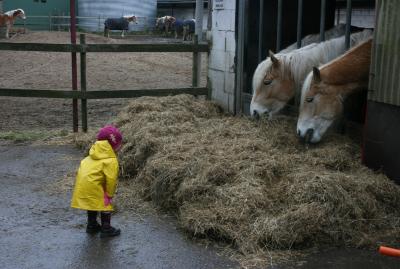
I was recently a guest on a Nashville podcast—Behind the Curtain: Nashville’s Movers, Shakers & Tastemakers—and because the conversation was happening in Music City, we ended up comparing the horse industry to something everyone there understands well: the music industry. The comparison was striking. The U.S. music industry is widely recognized as a major economic force, generating roughly $212 billion annually. But the horse industry is not far behind—at approximately $177 billion, supporting around 2.2 million jobs. What’s even more interesting is the difference in growth. While the music industry has grown by approximately 18% in recent years, the horse industry has expanded by roughly 45% over a similar period. From the outside, that kind of growth suggests opportunity. And in many ways, it is. But inside the industry, the experience often sounds very different....
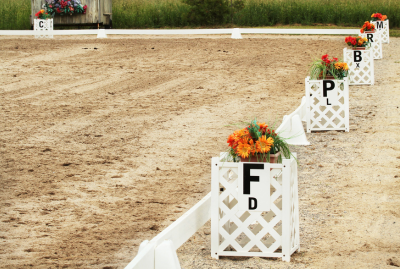
Last week, we talked about the difference between hustle and agility—how working harder isn't what moves a horse business forward. In fact, many horse professionals get so bogged down in the day-to-day that they simply push harder, without realizing they may be working against their own best interests. Without clear forecasting, effort gets misapplied—time, energy, and resources go toward maintaining the present rather than building what comes next. On the other hand, when outcomes are clearly mapped out in advance, effort can be aligned in a way that actually produces results that support the business long-term. Most professionals feel that difference immediately. They recognize the moments when they've stepped back, seen the bigger picture, and made decisions that moved them forward—not just kept them busy. But what often follows is just as important—and far less discussed. It works—until it's treated as a one-time fix instead of an ongoing practice. In a horse business, t...

When things shift, most people default to hustle. The horse professionals who do well start with clarity—then move with agility. In the horse industry right now, the pressure isn't imagined. It's coming from multiple directions at once—economic uncertainty, rising costs, staffing challenges, and even larger global events that ripple down into everyday decisions. When that happens, most people respond the same way. They push harder. They do more. They try to figure it out on their own. It feels productive. It usually isn't....

Horses were evacuated from the Global Champions Tour in Doha. Nearly 150 international show jumping horses—already on site—had to be quickly organized, rerouted, and flown out under emergency conditions after Iranian missile strikes and escalating conflict led to airspace closures across the region. That's not minor. That's the top of the sport just stopping, and then figuring it out. At the same time, across the industry, people are watching fuel and diesel prices climb. Some are losing grooms. Others are quietly trying to rework schedules, costs, and plans without making a big deal about it. But it is a big deal....
In most horse businesses, friction around policies and pricing is not caused by the policies or the pricing. It is caused by missing foundations. When the structural pieces of a business are weak — an unclear value proposition, vague brand position, underdeveloped aspiration — even reasonable policies feel harder to hold and harder to explain. That friction is not neutral. It costs time, energy, authority, and often margin. When the foundations are strong, policies and pricing feel natural. Expected. Aligned. Not because clients are passive — but because the business itself is clear. Let's look at the three foundational pieces that quietly reduce friction across your entire operation....
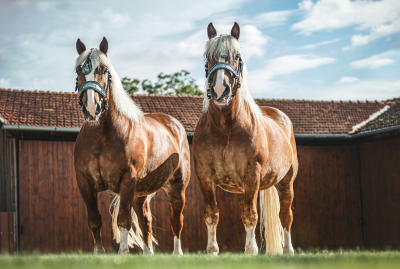
In most horse businesses, friction around policies and pricing is not caused by the policies or the pricing. It is caused by missing foundations. When the structural pieces of a business are weak — an unclear value proposition, vague brand position, underdeveloped aspiration — even reasonable policies feel harder to hold and harder to explain. That friction is not neutral. It costs time, energy, authority, and often margin. When the foundations are strong, policies and pricing feel natural. Expected. Aligned. Not because clients are passive — but because the business itself is clear. Let's look at the three foundational pieces that quietly reduce friction across your entire operation....
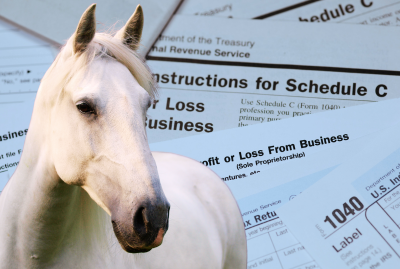
Horse professionals, come join us for your annual horse business tax update. There have been some important changes to the tax code that you need to know about! • Key tax law changes that will affect equine businesses • How to maximize deductions and reduce your tax liability • Common tax pitfalls for horse professionals—and how to avoid them Bring your questions! This is your chance to get expert advice tailored to the horse industry. ...

Some conversations shape the future of a horse business more than any spreadsheet ever will. They're the conversations that clarify expectations, preserve direction, and protect long-term relationships. They quietly prevent small problems from compounding—and support positive progression when it's time for a client to step into more responsibility, commitment, or development. These are also the conversations many of us put off—not because we don't care, but because the stakes are real. This isn't just about resolving conflict - there are certain conversations every horse professional should master because they serve both...
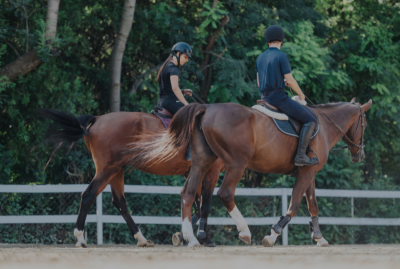
Most conflict in horse businesses doesn’t come from bad intent. It comes from unexamined impact. Clients, staff, partners, and even longtime friends often believe their actions are helpful or appropriate. Yet the cumulative effect of those interactions can quietly undermine your business, your time, or your authority. The problem is not that people mean harm. The problem is that good intent does not cancel out negative impact. Horse professionals are especially vulnerable here because our work is relational by nature. Horses respond to subtlety. Barns operate on trust. Clients often blur professional and personal lines because they feel emotionally connected—to their horse, to you, to the environment you’ve created. That emotional closeness can make it harder to address issues early, before resentment or dysfunction sets in. Understanding the difference between intent and impact—and learning how to speak to it clearly—is one of the most important leadership skills you can deve...

Several market forces are accelerating technology adoption in the horse industry. Clients are increasingly comfortable with digital platforms and often expect immediate access to information and services. At the same time, the cost of purchasing, caring for, and showing horses has risen, increasing expectations around professionalism, transparency, and accountability. As information becomes easier to compare and validate online, the industry continues to balance tradition with evolving client expectations....
Once you’ve clarified what to release, the focus shifts from ambition to alignment. One of the most overlooked aspects of goal-setting is time horizon. The new year creates an artificial sense of urgency, as if all progress must fit neatly into twelve months. But not all goals belong on the same clock....
Displaying Matches 17 thru 32 of 41 Found FIRSTBACK NEXTLAST