
This Month's Horse Business Tips and Upcoming Events
We are so glad you are here! As a newsletter subscriber you will get our tips delivered directly to your inbox! Here are some of our recent tips so that you can get current.
Dive Deeper into Your Horse Business Success
Welcome to our Horse Business Tip department, where every piece of guidance is designed to spark actionable insights and drive real results. Our expertly curated tips cover a wide range of topics crucial for the sustainability and growth of your equestrian business. But don't just stop at thinking about your business—take the next step towards transforming it.
Why Our Tips Matter
1. Practical Solutions: Each tip is packed with practical solutions that you can implement immediately, helping you tackle common challenges and optimize your operations.
2. Expert Insights: Learn from seasoned professionals who understand the intricacies of the horse industry and have a track record of success.
3. Holistic Approach: Our tips cover every aspect of your business, from financial management and marketing to operational efficiency and career development.
Take Action for Greater Impact
While our tips provide valuable insights, the real magic happens when you take action. As a member, you gain exclusive access to comprehensive resources and personalized support that go beyond just reading and thinking. Here's how you can maximize your business potential:
- Exclusive Tools
Access our extensive time-saving library of online calculators, budgets, and worksheets to simplify your financial planning and management. - Monthly Group Coaching
Join our group coaching sessions to get tailored advice, share experiences, and learn from both peers and experts. - Webinar Archives
Explore our archives of expert-led webinars covering topics that matter to horse professionals. Learn from the best in the industry and apply these strategies to your business - Private Consulting
For more personalized guidance, our private consulting services offer one-on-one support to address your unique challenges and goals.
Ready for Your Horse Business to Get Real Support?
Take the next step and turn your good intentions into actions that produce results.
Become a member today for only $39 per month. There is no risk with our 30-day money back guarantee. Unlock the full potential of your horse business with our exclusive tools and group coaching. Add private consulting services as needed.
Running a horse business requires making decisions every day. Some are relatively straightforward. Others can have consequences that unfold over months or even years. But when you're busy managing horses, clients, employees, schedules and finances, it's easy to lose sight of how those decisions are affecting the bigger picture. That's why conducting a quarterly business and career review can be so valuable....More There are significant changes taking place in the equestrian industry, both at the elite and entry levels of the sport. This week, I want to focus on a trend I'm seeing in lesson programs: the growing emphasis on structuring riding instruction as a scalable, recurring revenue business. Subscription pricing, standardized curricula, group lessons and increased utilization of horses, instructors and facilities are being promoted as ways to improve profitability. The appeal is understandable but the results don't always match expectations, financially or operationally. When a business model depends on making instructors, horses and the riding experience increasingly interchangeable, it can change what customers expect, what they value and how they relate to horses and the professionals teaching them. Those changes have implications that extend well beyond the lesson program itself. What happens when we commoditize something that probably shouldn't be commoditized?...More When I look back at myself as a younger horse professional, I actually had pretty good business instincts. I was in my thirties when I bought my equestrian facility in Santa Barbara, I knew owning the property could give me greater financial security. I understood the value of the property having rentals - passive income. I knew that becoming a better rider and trainer and working with better horses could lead to better clients and opportunities. I was resourceful, worked hard and made a lot of good decisions. What I didn't have were some of the tools I have now for seeing how all of those decisions interacted. I could see the individual pieces, but I couldn't always see the whole chessboard. I think that's true for a lot of horse professionals. Most are doing an enormous number of things right. They have good instincts, solve problems constantly and know their horses, clients and markets extraordinarily well. But they're also holding a tremendous amount of business and career...More Most horse professionals already have more things competing for their attention than they have time to address. What is harder to find is a place to step outside the day-to-day demands of the business, think strategically about both the business and your professional career, talk through important decisions with people who understand the industry, and get help when you need it. So we're changing the way Equestrian Professional Membership works....More data-page_number="2561"Inside a Quarterly Review: What Happens When Horse Professionals Step Back and Track the Bigger Picture
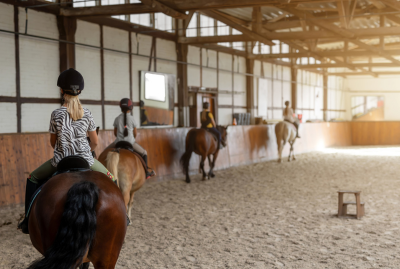 data-page_number="2560"What Happens When We Commoditize Riding?
 data-page_number="2559"Instincts, Integration and Outcomes
 data-page_number="2557"A New Way to Work With Equestrian Professional
Running a horse business requires making decisions every day. Some are relatively straightforward. Others can have consequences that unfold over months or even years. But when you're busy managing horses, clients, employees, schedules and finances, it's easy to lose sight of how those decisions are affecting the bigger picture. That's why conducting a quarterly business and career review can be so valuable....More
There are significant changes taking place in the equestrian industry, both at the elite and entry levels of the sport. This week, I want to focus on a trend I'm seeing in lesson programs: the growing emphasis on structuring riding instruction as a scalable, recurring revenue business. Subscription pricing, standardized curricula, group lessons and increased utilization of horses, instructors and facilities are being promoted as ways to improve profitability. The appeal is understandable but the results don't always match expectations, financially or operationally. When a business model depends on making instructors, horses and the riding experience increasingly interchangeable, it can change what customers expect, what they value and how they relate to horses and the professionals teaching them. Those changes have implications that extend well beyond the lesson program itself. What happens when we commoditize something that probably shouldn't be commoditized?...More
When I look back at myself as a younger horse professional, I actually had pretty good business instincts. I was in my thirties when I bought my equestrian facility in Santa Barbara, I knew owning the property could give me greater financial security. I understood the value of the property having rentals - passive income. I knew that becoming a better rider and trainer and working with better horses could lead to better clients and opportunities. I was resourceful, worked hard and made a lot of good decisions. What I didn't have were some of the tools I have now for seeing how all of those decisions interacted. I could see the individual pieces, but I couldn't always see the whole chessboard. I think that's true for a lot of horse professionals. Most are doing an enormous number of things right. They have good instincts, solve problems constantly and know their horses, clients and markets extraordinarily well. But they're also holding a tremendous amount of business and career...More
Most horse professionals already have more things competing for their attention than they have time to address. What is harder to find is a place to step outside the day-to-day demands of the business, think strategically about both the business and your professional career, talk through important decisions with people who understand the industry, and get help when you need it. So we're changing the way Equestrian Professional Membership works....More
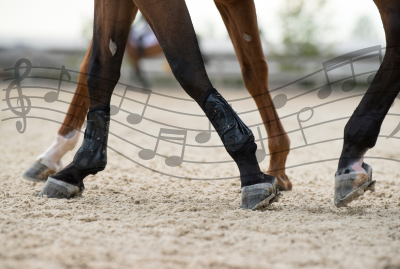
Here in the Nashville area, you don't have to spend much time around the music business to notice something interesting about creativity: many great songs are co-written. In fact, research on songs reaching the Billboard Hot 100 Top 10 has found that roughly 90% were written by teams of two or more credited writers. It isn't because writers aren't capable of writing a hit song by themselves, and it isn't simply a way to divide the workload. They write together because something different can happen when creative minds work on the same project. One person brings in an idea. The other hears something in it that the first person didn't. That triggers another idea, which changes the first one. A line that wasn't quite working suddenly goes somewhere unexpected. Someone asks, “What if we did this instead?” and three hours later they've written a song that didn't exist in a finished form in either person's mind when they walked into the room. And perhaps just as importantly, it's fu...More

October may be the most important strategic planning month of the year for a horse business. It comes at an unusual point. Most of the current year is behind you, which means you have real information about your financial performance, horses, clients, staffing, capacity and opportunities. But there is still enough time left in the year to make thoughtful decisions about the year ahead. For many horse professionals, this happens while the current year is still very much underway. Horses and...More
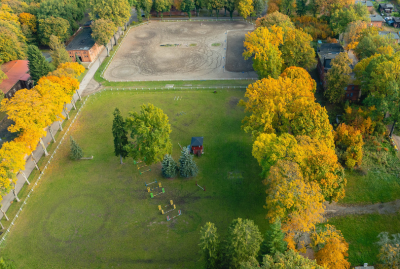
When something isn't working in your horse business, the obvious solution can be tempting: raise your prices, find more clients, add stalls, cut expenses or improve your marketing. But horse businesses don't operate in isolated pieces. A change in one area can create consequences somewhere else—and sometimes an unexpected opportunity. Before deciding what to fix, it helps to understand how the whole business works together. A trainer decides she needs more clients. It's a reasonable conclusion. More clients mean more revenue, so she puts more effort into marketing. And it works. Six months later, revenue is up, but she's busier than ever. Her staff is stretched, her best customers are getting less of her attention, she's spending less time riding and, despite all that additional activity, her income hasn't improved nearly as much as she expected. The marketing worked. The business decision didn't....More

One of the biggest challenges in the horse business is the cost of real estate. A professional may have a solid business that can support the cost of operating a good facility but still be nowhere close to being able to buy a $1.5 million or $2 million property (or more). At the same time, real estate investors have a different problem. In many markets, property prices have risen much faster than rents. By the time you account for property management, vacancies, tenant turnover, insurance, taxes, repairs and maintenance, the return on a conventional rental property may not be nearly as attractive as the purchase price suggests. This got me thinking about commercial equestrian properties and 1031 exchanges. Could a good commercial horse property make sense as an investment property? And could that create a win/win for both the investor and the horse professional?...More
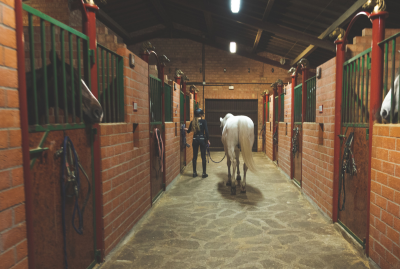
By the end of summer, most horse professionals have accumulated a pretty good list of things they never want to do quite the same way again. That list is valuable. Summer tends to put horse business operations under pressure. Heat changes how and when work can be done. Show schedules disrupt normal routines. Vacations affect staffing and clients. Horses require different management. Long days can make an inefficient system physically exhausting. So before summer disappears in the rearview mirror, make a list. Not a list of everything that went wrong. A list of what summer taught you about how your business operates. Start with...More

Over the past two weeks we've looked at the gap between real expertise and authority posture in the horse world, and what horse professionals can do to communicate the level of their expertise despite that gap. This week: how to help your clients recognize real expertise for themselves. This matters because your clients are the ones making assessments about horses, trainers, veterinarians, farriers, and other professionals every day. What they can see determines what happens to their horses, their kids, and their money. Teaching them to see well is part of the work. Clients often stay with the same professionals for many years. That long-term relationship is one of the strongest signals of quality in this industry. But even in strong long-term relationships, real professionals sometimes forget to explain the process and why it matters...More
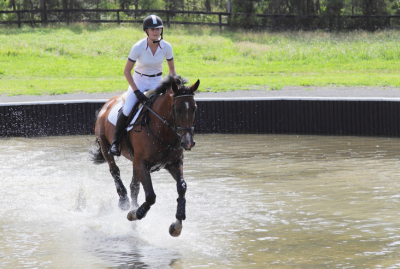
Last week we looked at the gap between real expertise and authority posture in the horse world, and why the market has become worse at telling them apart. This week: what to actually do to communicate the level of your expertise in that market. 1. Stop trying to compete on the authority type's terms. Many horse professionals try to fix the problem by posting more, being more visible, being more confident on social media. That approach usually fails because it asks them to be someone they aren't, and because it's competing on the ground where authority types are already winning. The move isn't to become louder. It's to become clearer about what real expertise offers that authority posture can't....More
Last week we looked at the gap between real expertise and authority posture in the horse world, and why the market has become worse at telling them apart. This week: what to actually do to communicate the level of your expertise in that market. 1. Stop trying to compete on the authority type's terms. Many horse professionals try to fix the problem by posting more, being more visible, being more confident on social media. That approach usually fails because it asks them to be someone they aren't, and because it's competing on the ground where authority types are already winning. The move isn't to become louder. It's to become clearer about what real expertise offers that authority posture can't....More
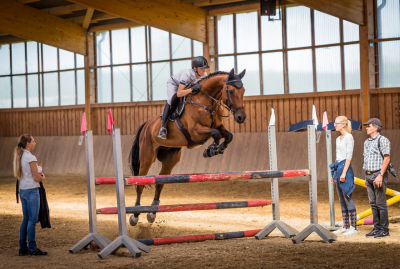
The horse professionals I respect the most are also the least likely to tell you how much they know and how good they are. They were trained by multiple experts across their lifetime. They spent decades learning their trade. They entered the horse world with a longing to learn and improve, seeking out the best training they could find and they kept going. They competed and held their skills together under pressure. They developed horses whose progress was measured in years, not weeks. They coached clients to real success and are the ones who notice the slightest change in temperature when they run their hands down a horse's leg. They know things about training, horse care, barn management, and clients that they don't post about, because posting about them would flatten them....More

Over the past two weeks we've looked at two kinds of clients who are hard to manage for different reasons. Susie and Charlotte, and Carolyn and Steve. Both patterns can end with a rider out of the sport and a horse professional carrying what shouldn't have been theirs to carry. This week: what actually helps....More
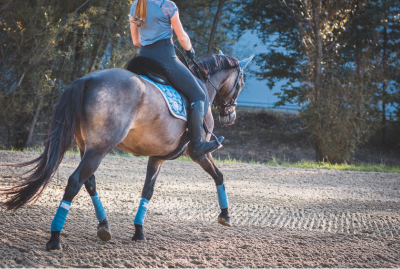
Last week we looked at the overcommitted client — Susie and Charlotte. The family who wants it more than they can afford, where the heartbreak grinds slowly. This week, the other kind of client. The family who has what it takes financially but won't put it toward the sport. Where the cost lands on the rider instead. Carolyn and Steve are this kind of client. Carolyn is fifteen, talented, and ready to move up. She's been riding the same horse for three years and has outgrown him. Everyone can see it. You can see it. Carolyn can see it. The judges at shows see it. The other trainers see it....More
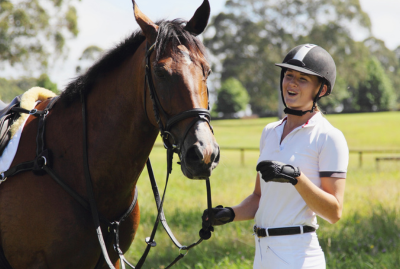
We often think the client who won't commit is the problem. But what about the client who overcommits? They can be as hard on your business and career as the undercommitted client. Here are two patterns worth looking at. The overcommitted client and the undercommitted client. They look like opposites. They end the same way. This is a three-part series. The overcommitted client this week. The undercommitted client next week. The business practices that help with both in Part 3. This week, the overcomitted client and what that looks like....More