Case Study: LaBarre Dressage - How the Right Resources Changed the Trajectory
Michelle LaBarre is a Grand Prix dressage trainer with an education very few American professionals have. She trained at the Reitinstitut von Neindorff in Karlsruhe, Germany, receiving a full classical schooling in the German tradition at one of the institutions that kept that tradition intact. Following her time at Von Neindorf's Michelle studied with Carel EIjkenaar for 15 years. As the protege of Georg Theodorescu, Mr. EIjkenaar helped deepen MIchelle's understanding of classical theory and how to apply to each specific athlete such that they could reach their own potential. She has competed at national CDI and CPEDI levels, rides at Grand Prix, and has operated LaBarre Dressage since 2006. She teaches the same classical system she was schooled in, working with riders at every level from the basics up.
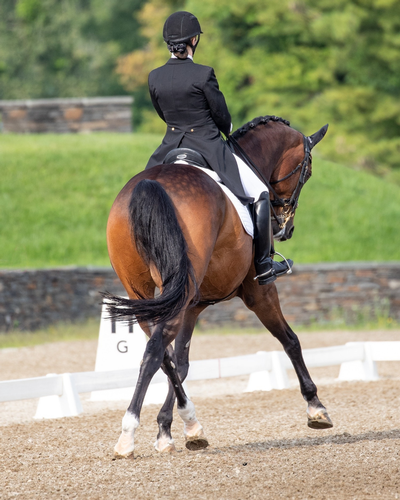
By late 2025, nothing that had to do with her providing value to her current clients or growing a bigger training business was the problem. She was working fifteen-hour days out of a commercial boarding stable, and every dollar the business earned was attached to an hour of her own labor. She had run out of hours.
The indoor arena at that stable was good, and it was hard to replace. However, the barn atmosphere was challenging. This is a common difficulty when a professional operates out of a commercial boarding barn, where management may be focused on accommodating diverse boarders rather than maintaining the consistent standards a professional training program requires. Without consistently enforced standards, the least experienced or least safety-conscious people on a property can create risks for everyone.
Michelle said it better than I ever have. "If someone doesn't have standards, they don't know when you've raised the bar." It has become one of my favorite sayings, and it is that barn in a single sentence. Her standard could not even register in a place that had none.
For any professional, that is a liability. The place also demanded far more physical labor than a well-laid-out barn would, and that is a cost a business pays every single day.
She did have a plan. She intended to move her operation to a facility being developed nearby. That plan stalled on county zoning and permitting with no date attached, and she was left where she was.
Michelle engaged me, Elisabeth McMillan of Equestrian Professional, through a grant from the Team Tate Mentorship and Leadership Fund, administered by The Dressage Foundation, a grant that funds business and leadership mentorship for dressage professionals. We had worked together before in an Equestrian Professional mastermind group, so I came into the engagement already knowing the business. It ran from December 2025 through October 2026.
What Was Actually in the Way
The first job was to establish where she wanted to go as a professional and business owner, and what was standing in her way. The answer was complex, because it showed up in multiple areas but could not be solved without one fundamental change.
She was working her heart out without much to show for it financially. The facility was difficult in terms of culture, and it was operationally labor intense. And because it was not in alignment with her brand, it was hard to grow the aspects of the business that leveraged her skillset without maxing out her time even further.
We started by mapping LaBarre Dressage on the Equestrian Professional Business Model Canvas. Her value proposition (the quality of her teaching, her standard of care, what a horse becomes under her program) was strong, and it needed nothing from me. The problem was in the resources and revenues blocks. She did not have the right facility to work from.
Resources sit upstream of most of the canvas, which is why the problem brought so much complexity. It was not presenting as one issue. It was presenting as six. There were services she could not offer. There were customers she could not serve, because there was nowhere to put them. Her four revenue streams each consumed her own hours, which made growth and exhaustion the same thing. There was no setting in which to film or host anyone. Her staff were consistently overworked, not by the job itself but by navigating the flaws in the facility. And her time was going into managing a facility rather than into horses.
Any one of those could have been taken on as a project. Raise the rates. Market harder. Rework the schedule. In that facility, each of them would have been work the facility then undid.
So the direction was set: the resource had to change first, not because the facility was the answer, but because nothing we built afterward would hold until it did.
Finding What Would Work
That changed what we were looking for. Not simply somewhere better to keep horses, but somewhere that would let Michelle earn without riding every hour of it herself.
The requirements were specific. She needed somewhere she could film, run clinics and events, host competitions and sell horses, because those are the ways her knowledge earns without her trading hours for dollars. She also needed a barn where she set the standard, which after the boarding-stable experience meant a private facility rather than shared commercial space. Layout matters. Labor and bedding savers like stall mattresses matter. The distance to turn-outs matters. Sightlines matter.
Those requirements are what the facility search was conducted against, and they are why Hilltop Retreat was the right answer when it appeared.
Building the Business That Could Use It
The facility made new services possible. It did not create them, and this is where most of the engagement's work went.
Each new service had to be built as a service rather than an intention: something with a delivery method, a capacity, a cost to deliver and a rate. Online lessons by Pivo. Clinics. Show coaching. Hosted events. A sales program. For each one we worked out how it would run, who it was for, what it cost Michelle to deliver and what it should be priced at.
We rebuilt her rate structure from the ground up against the new facility's capabilities and its cost base. That is work which would have been pointless a year earlier and was straightforward once there was a facility that justified the rates and a staffing structure that could deliver them.
We took the business from four revenue streams to seven and sequenced their introduction so that each could be established without disrupting the existing business. Because Michelle's established revenue streams were already strong, we focused on developing new streams that could generate additional income without placing further demands on her riding and teaching hours. This was how we could lift the ceiling on the business's earning potential.
Alongside that: a two-year monthly financial model covering every stream, built so that Michelle maintains the operating drivers while the cost basis comes from accounting records, with each event reduced to a single profit figure. Her positioning and target markets documented, including a rehabilitation focus and a longevity and transformation narrative. Roles and responsibilities defined against named people, and the staffing structure built around reliable paid roles. A written business plan with goals set by year. And a biweekly session cadence, which is what turned all of it into things that actually happened.
What Changed
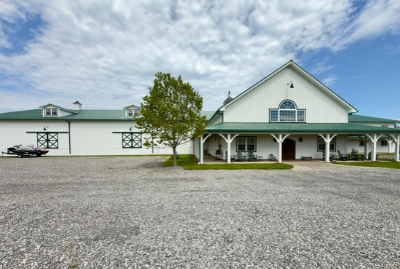
LaBarre Dressage now operates from a property with a private barn, indoor arena, turnout, on-site housing and hay storage, with an outdoor arena in planning. It supports filming, clinics, events and a sales program, none of which was possible before.
Revenue streams went from four to seven, and customer segments expanded with them. Horse buyers and event attendees joined lesson and clinic students. Three revenue events ran at the new facility in its first season, with a symposium following in November. Paying event attendance is now established rather than hoped for.
The operational differences are substantial. Daily chore time has fallen sharply, which returns hours every week to training. Michelle rides meaningfully more horses before lunch than she could at the old facility. She can see and communicate along the full length of her own barn aisle. And in a private barn she sets the safety standard herself, rather than inheriting whatever the least experienced person on the property happens to do.
That last one is not a business metric, and it may be the most important line in this case study. A business that rested entirely on one person's physical capacity now has infrastructure underneath it. Michelle's knowledge, rather than her physical labor alone, is increasingly what generates revenue, creating the foundation for a business she can continue to develop throughout her career.
One more thing, because a case study can make a year like this read more tidily than it was lived. Michelle found the facility, negotiated the move, kept every horse in work through it, and ran three events in her first season on a new property, all while doing the business work described here on top of her riding and teaching. The planning was the straightforward part. She did the hard part, and she did it without lowering her standard once.
The grant engagement concluded in October 2026. The heavy build is done, and Michelle and I now work together monthly through Equestrian Professional's Private Advisory, where the implementation carries on: holding the plan, testing the next decisions against the model, and adding the pieces that were sequenced for later.
About LaBarre Dressage
Michelle founded LaBarre Dressage in 2006 in East Aurora, New York, and moved the business to Hilltop Retreat in Phoenix, New York, in the summer of 2026. She is committed to the classical process and to correct, straight riding that builds fitness and flexibility over time. Her particular skill is combining her refined feel in the saddle with classical theory and science based training to transform horses physically and mentally.
She works with every sort of horse (warmbloods, ponies, Thoroughbreds, draft crosses), though she has developed a special niche in remaking school masters and FEI horses with significant training holes. Though her students range in age, skill level and even discipline, they all share a passion for understanding their role in their horse's comfort and learning. She often coaches dressage professionals and their students in off site clinic settings. Her own summary of the process is: Ride them forward, dance them upward.
LaBarre Dressage also hosts the Blind Equestrian Community, an informal national community of blind riders and their coaches, families and friends, which exists to bring that community together and to advocate for blind riding at all levels and in all disciplines. Michelle hosted and coached its clinic in 2025 and the group gathered again at Hilltop in the summer of 2026. The community's pages, including tips for trainers working with blind riders, are published on the LaBarre Dressage site.
The business offers board, training, lessons, online lessons, clinics, show coaching, accountability groups, events and working student positions. Further information is at labarredressage.com.
LaBarre Dressage
www.labarredressage.com
Published with Michelle LaBarre's permission. Specific financial figures, rates and operating details have been withheld. Equestrian Professional gratefully acknowledges The Dressage Foundation and the Team Tate Mentorship and Leadership Fund, which fund business and leadership mentorship for dressage professionals, an area of professional development that is rarely supported.
Not yet a member?
Equestrian Professional offers different levels of resources and support depending on what you need. Resource Membership provides access to our extensive library of horse business tools, webinars, articles and guides. Professional Membership adds Group Coaching, Horse Business Review & Planning and special events. Private Advisory provides ongoing one-to-one consulting. Private Consulting and Strategic Consulting are also available when you need focused or more in-depth support.